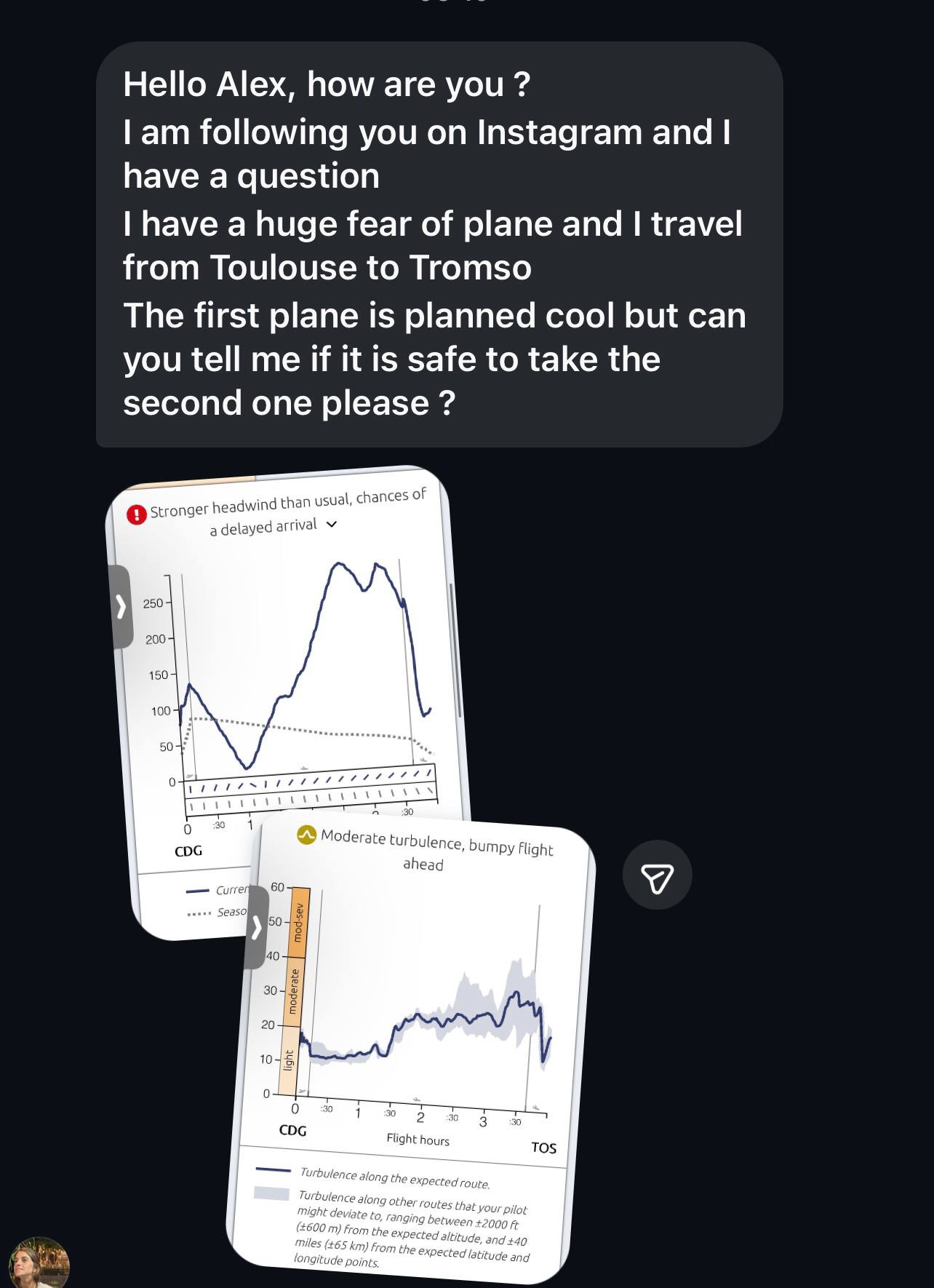
Ответ и да, и нет — особенно для людей, склонных к тревоге.
Да: ведь непредсказуемость — один из главных факторов, вызывающих страх у пассажиров. Знание того, чего ожидать, помогает снизить уровень тревоги. Прогнозы создают ощущение контроля и уменьшают степень непредсказуемости.
Нет: и вот почему:
Точность прогнозов по-прежнему довольно низкая — около 51–53 %. Это едва ли лучше, чем подбрасывание монеты. ⠀
Если в прогнозе погоды указана «умеренная» или «сильная» турбулентность, вы, возможно, отмените полет. Мозг вознаграждает такое избегание выбросом гормонов удовольствия (дофамина и эндорфинов), внушая вам, что отказ от полета приводит к улучшению самочувствия. Со временем этот цикл делает полеты ещё более сложными. ⠀
Если вы не сможете отменить полет, то сядете в самолет уже в страхе, ожидая, когда начнется эта «страшная» турбулентность — даже если на самом деле этого и не произойдет. ⠀
Если в прогнозе говорится «полет пройдет гладко», вы можете забеспокоиться: «А вдруг это не так»? ⠀
А если прогноз окажется неверным — если вы почувствуете тряску, несмотря на обещания гладкого полёта, вас охватит паника: «Это не может быть турбулентность; что-то должно быть не так!» ⠀
Чем больше умственной энергии вы тратите на прогнозы, ожидания и попытки избежать неприятностей, тем больше вы преувеличиваете значение самой турбулентности. На самом деле турбулентность — это всего лишь движение: любая форма транспорта подвержена тряске. Для пассажира, пристегнутого ремнем безопасности, турбулентность на 100 % безопасна. Но если придавать ей слишком большое значение, безобидная тряска превращается в страшное чудовище.
Так в чём же заключается правильное решение?
Научитесь справляться с любой ситуацией — когда она возникнет. Это означает понимание не только правил безопасности полетов, но и собственного психологического состояния, а также умение управлять своими реакциями. Вам не нужно контролировать турбулентность; вам нужно контролировать свои мысли и тело в этой ситуации.
В долгосрочной перспективе одни лишь прогнозы о турбулентности могут принести больше вреда, чем пользы человеку, страдающему страхом перед полетами. Предсказуемость помогает, но только в рамках комплексного и структурированного набора методов борьбы со страхом.
Именно этим и занимается приложение SkyGuru. Оно не только предоставляет прогноз турбулентности, но и предлагает людям, боящимся летать, различные психологические инструменты. Оно помогает им справляться с турбулентностью не путем ее избегания, а путем контроля над своей нервной системой в случае возникновения внешней (или внутренней) турбулентности.