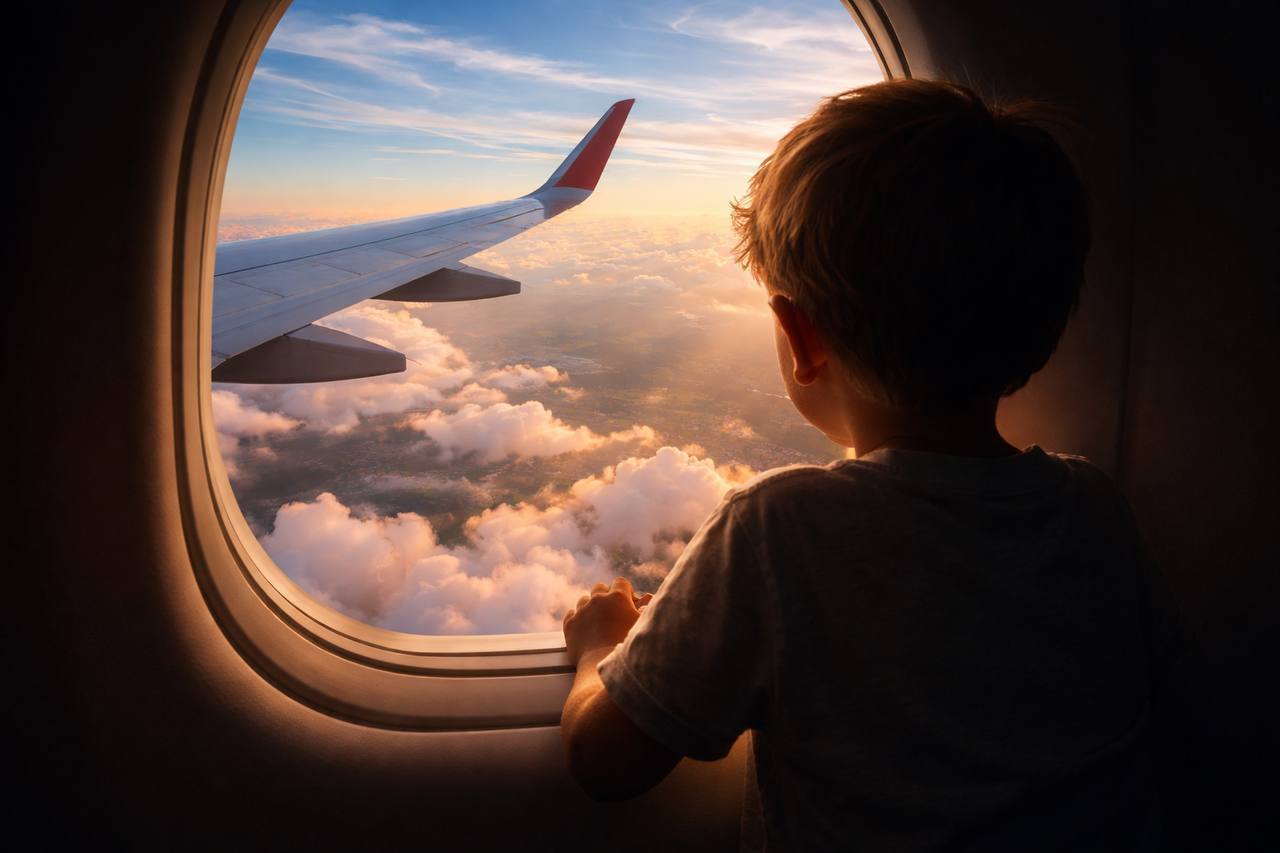
Когда ко мне обращается родитель, страдающий боязнью полетов, я почти всегда задаю один и тот же вопрос : «Когда у вас это началось?» И чаще всего ответ уводит нас в детство. Турбулентный полет в семь лет. Родитель, который сжимал подлокотник каждый раз, когда самолет трясло. Бабушка, которая перед каждой поездкой объявляла, что обновила завещание.
Страх перед полетами не является генетическим. Но он передаётся по наследству. Не через ДНК. А через поведение. Через нервную систему взрослых, которые вас воспитывали. Через значение, которое они придавали вполне нормальным ощущениям.
Как страх укореняется в детском мозге
Дети рождаются, не зная, что такое опасность. Они узнают об этом в основном из двух источников: из собственного опыта и по реакции тех, кто о них заботится.
Это называется социальной ориентацией. Когда малыш падает и смотрит на родителя, прежде чем решить, плакать ему или нет, — это и есть социальная ориентация. Ребёнок изучает выражение лица взрослого, чтобы понять, опасно ли то, что только что произошло.
Точно так же происходит и в самолете. Ребенок чувствует турбулентность. Самолет трясется. Ребенок смотрит на родителя. Если на лице родителя отражается страх, ребенок получает очень четкий сигнал: мы в опасности.
Амигдала ребенка фиксирует весь этот опыт. Шум двигателей. Ощущение от ремня безопасности. Физическое ощущение от тряски при турбулентности. Все это обозначается одним ярлыком: «угроза».
Три причины страха перед полетами у детей
Первый путь — это непосредственная передача от родителя. Родитель, который боится летать, передает этот страх с помощью языка тела, мимики, интонации голоса и поведения. Дети чрезвычайно чувствительны к эмоциональному состоянию тех, кто о них заботится.
Второй путь — это травматический непосредственный опыт. Ребёнок переживает сильную турбулентность, уход на второй круг или жёсткую посадку, которые его нервная система интерпретирует как угрозу жизни. Само по себе событие не обязательно должно быть опасным. Достаточно того, чтобы ребёнок воспринял его как опасное.
Третий путь — это косвенное восприятие через СМИ, рассказы или других людей. Ребёнок смотрит фильм, в котором разбивается самолёт. Дети не умеют правильно оценивать вероятность. Они понимают лишь то, что самолёты могут падать с неба.
В чём ошибаются родители
Избавление от страха. Если сказать ребенку, что бояться нечего, он начнет стыдиться своего страха. Стыд не уменьшает страх. Он лишь заставляет его скрываться.
Чрезмерная уступчивость перед страхом. Полный отказ от полетов посылает ясный сигнал: летать действительно опасно. Избегание — это то, что подпитывает страх.
Чрезмерное успокаивание. Постоянные заверения ребенка в том, что всё в порядке, приводят к формированию зависимости. Успокаивание — это краткосрочное решение, которое порождает долгосрочную проблему.
Если заставлять ребёнка переживать это без предварительной подготовки, это может стать травмирующим опытом, который только усугубит страх.
Что действительно работает
Подтвердите их переживания. «Я вижу, что ты боишься. Это вполне понятно. Твое тело пытается тебя защитить». Таким образом вы даете понять, что их переживания реальны и обоснованы, не подтверждая при этом, что опасность действительно существует.
Объясняйте детям, учитывая их возраст. «Самолет создан для того, чтобы летать в воздухе, точно так же, как лодка плывет по воде. Когда мы чувствуем толчки, это воздух толкает самолет, так же как волны толкают лодку».
Подготовьте нервную систему. Потренируйтесь вместе дома в дыхании животом. Превратите это в игру. Делайте это ежедневно в течение нескольких недель перед полетом.
Сначала приведите себя в порядок. Вы не сможете помочь ребенку успокоиться, если ваша нервная система находится в состоянии дисрегуляции. Дети читают по нервной системе, а не по сценарию. Если вы спокойны, ребенок переймет это спокойствие.
Долгосрочная перспектива
Детский страх перед полетами не обязательно должен перерасти во взрослый страх перед полетами. Нервная система, которая научилась бояться, может научиться чувствовать себя в безопасности. Если вы — родитель и читаете эти строки, самое эффективное, что вы можете сделать для ребенка, испытывающего страх в самолете, — это самому искренне чувствовать себя в безопасности.